← Back to home
§ The Library

Listen. Read. Then decide.

Where these planks come from — the books, essays, and talks that shaped them. Disagree, dig in, then come argue with me about it. Ask me: info@2amike4congress.org

3 planks 22 resources
№ 01 Accountability

Restore Accountability. Open the Books!

Washington forces every public company, grant-funded nonprofit, and state that touches federal dollars to submit to an independent outside audit — yet exempts itself, and hasn't earned a clean audit opinion in 28 years. I'll make the government live by its own rule.

Watch
№ 02 Sound Money

Restore Sound Money. Make America Affordable Again!

Inflation is a hidden tax no one voted for — the dollar has lost more than 96% of its value since the Federal Reserve was created in 1913. I'll work to end the federal monopoly on money and repeal the legal-tender coercion that forces Americans to save in a currency designed to lose value.

Watch
Do you want a PhD in monetary economics? Just watch Dumb and Dumber.
Read
Book
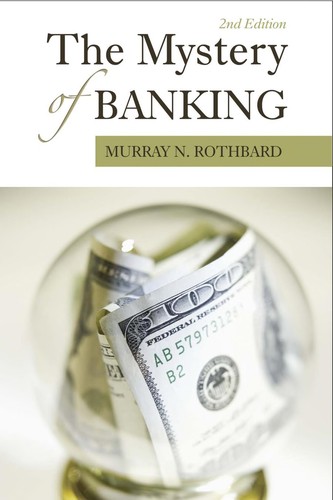
The Mystery of Banking
Murray N. Rothbard — Mises Institute
1983 · Mises ed. 2008

Rothbard explains money and banking step by step: where money comes from, how fractional-reserve banking and a central bank expand the money supply, and why a 100-percent commodity standard is the honest alternative. No prior economics required.

Why it's on the list

The clearest single book on what the Federal Reserve does to the dollar — the argument behind this whole plank, and free to read.

  • How fractional-reserve banking multiplies the money supply
  • Why a central bank is, structurally, an engine of inflation
  • What 100-percent-reserve, commodity-based money would restore

How banks create money out of nothing — and how the Fed turns that into inflation.

Book
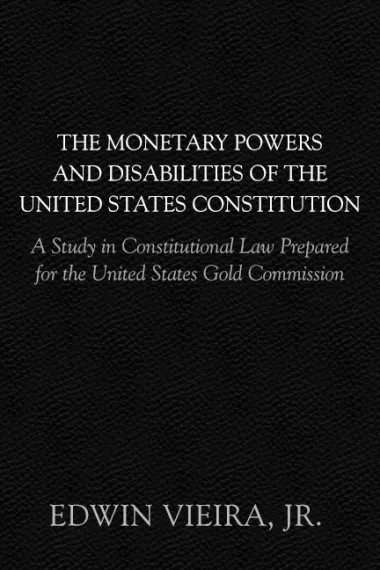
The Monetary Powers and Disabilities of the U.S. Constitution
Edwin Vieira, Jr.

A constitutional-law study of the monetary powers and disabilities the Constitution contains, and how far they deny Congress authority to run a fiat-currency system rather than the gold and silver coin the Founders specified.

Why it's on the list

The constitutional backbone of this plank — the gold-and-silver Constitution, documented to the source.

  • What 'coin Money' and 'regulate the Value thereof' actually authorize
  • Why the States may make only gold and silver coin a tender
  • The constitutional case against legal-tender paper money

Vieira's landmark study for the U.S. Gold Commission — what the Constitution actually says about money.

Book
Pieces of Eight
Edwin Vieira, Jr.
1983 414 pp.

A document-by-document history of money under the U.S. Constitution, from the colonial and Founding eras forward: what the 'dollar' was defined to be, why the Constitution makes gold and silver coin the only lawful tender, and how the modern fiat-currency system departed from that design. The definitive long-form version of the constitutional argument this plank rests on.

Why it's on the list

For readers who want the whole case, not the summary — Vieira's complete constitutional brief for honest money, free to read.

  • How the Constitution defines the 'dollar' as a fixed weight of silver
  • Why only gold and silver coin can be a constitutional tender
  • The full historical record behind the case against fiat legal-tender paper

Vieira's full-length treatise on the Constitution's money — the exhaustive work behind the Gold Commission study above.

№ 03 Second Amendment

Restore the Militia

The constitutional militia — the people's own retained foundation, standing beneath the ballot, the courts, and the jury — has been hollowed to a name. The National Guard is not the militia, and the 2025–26 federalized-Guard deployments turned a century-old structural problem into a live constitutional crisis. I'll work to restore the design the Framers actually wrote.

Watch
What is a Constitutional Militia? Constitutional Militia
Read
Book
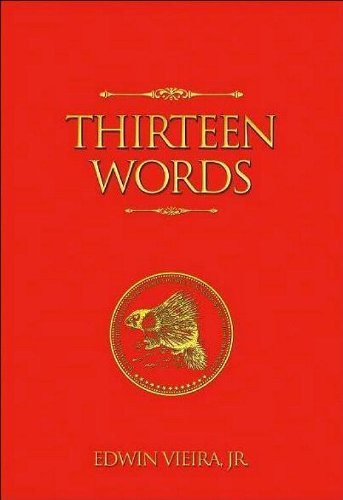
Thirteen Words
Edwin Vieira, Jr.
2013

Vieira unpacks the militia clause word by word and shows how a revitalized Militia of the several States could address modern problems — reining in rogue officials, overseeing the military-industrial complex, securing honest elections, and providing an alternative currency.

Why it's on the list

The accessible Vieira book behind this plank and the featured lecture.

  • What the militia clause's thirteen words actually establish
  • Why the Militia is distinct from the National Guard
  • How a revitalized Militia could check federal overreach today

A close study of the Second Amendment's first thirteen words: 'A well regulated Militia, being necessary to the security of a free State.'

Book
Constitutional "Homeland Security," Vol. I: The Nation in Arms
Edwin Vieira, Jr.
2007 188 pp.

A 188-page argument that the Constitution makes the Militia — not a standing federal force — the proper instrument of 'homeland security,' with a practical call for the States to rebuild it.

Why it's on the list

The companion to Thirteen Words — Vieira on why 'homeland security' is constitutionally a Militia function, not a standing-army one.

  • Why 'homeland security' is constitutionally a Militia function
  • What a revitalized state Militia would look like

The short, readable entry to Vieira's case for revitalizing the militia of the several States.

Book
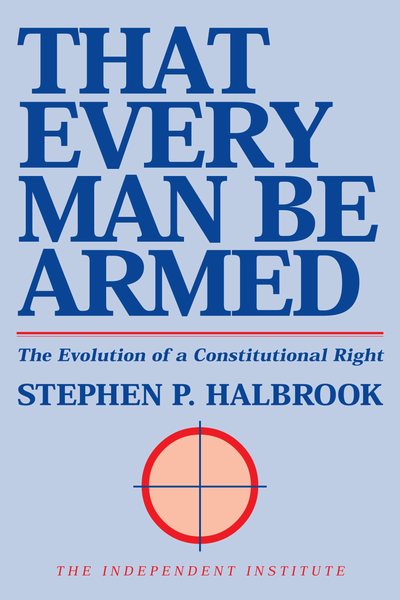
That Every Man Be Armed: The Evolution of a Constitutional Right
Stephen P. Halbrook
1984 · rev. ed.

Halbrook traces the right to keep and bear arms from ancient Greece and Rome through English common law to the American Founding, building a systematic reading of the Second Amendment from the historical record.

Why it's on the list

The standard non-Vieira scholarly reference — cited in Supreme Court opinions and DOJ analysis.

  • The right to arms long predates the U.S. Constitution
  • How the founders understood 'the people' and 'bear arms'

The first scholarly history of the Second Amendment — antiquity to the Constitution.