
The Coinage Act of 1792, Annotated
The candidate's annotated copy of the Coinage Act of 1792 — the founding statute that established the U.S. Mint, defined the dollar as a fixed weight of silver, set the silver-to-gold ratio at 15 to 1, and made debasing the nation's coin a capital offense. Reproduced from the Statutes at Large with the candidate's handwritten margin notes marking what 'sound money' meant to the Founders: a specific weight of gold and silver, fixed by law.
The Coinage Act of 1792 — An Act establishing a Mint and regulating the Coins of the United States (Second Congress, Sess. I, Ch. 16) — is the country’s first monetary law. It did two very different things. It defined the dollar as a fixed weight of pure silver and made debasing the coin a capital offense (§ 19) — the legitimate exercise of the power to “fix the Standard of Weights and Measures.” And it fixed the price between gold and silver at 15 to 1 (§ 11) — a number no legislature can get right, and the one that triggered Gresham’s Law and a century of monetary havoc. (For why that single number mattered, see The 15-to-1 Mistake.)
Below is the candidate’s own annotated copy, reproduced from the Statutes at Large. The handwritten margin notes mark the founding definition of the dollar, the 15-to-1 ratio, and the death penalty for debasement. The full six-page document is available to download at the bottom of the page.
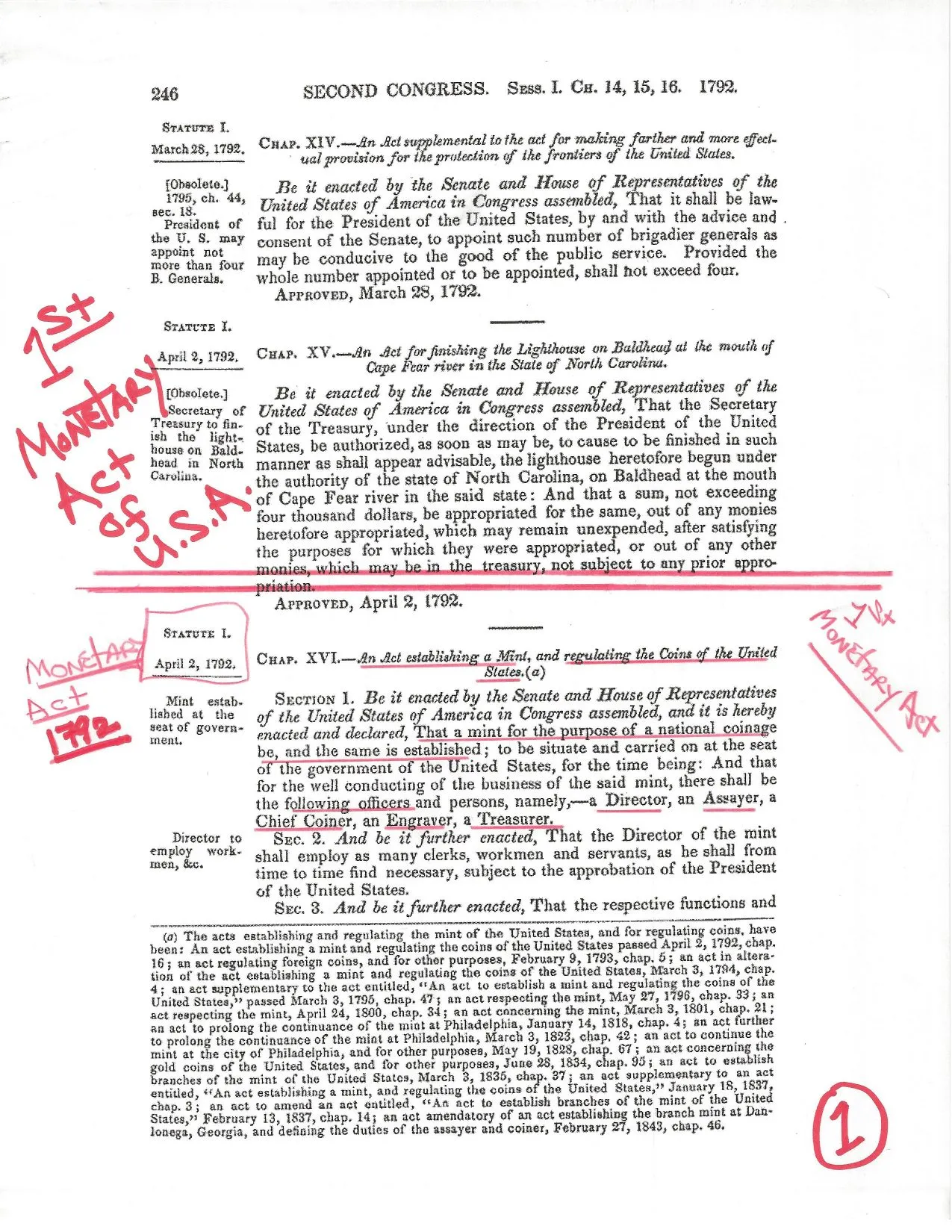
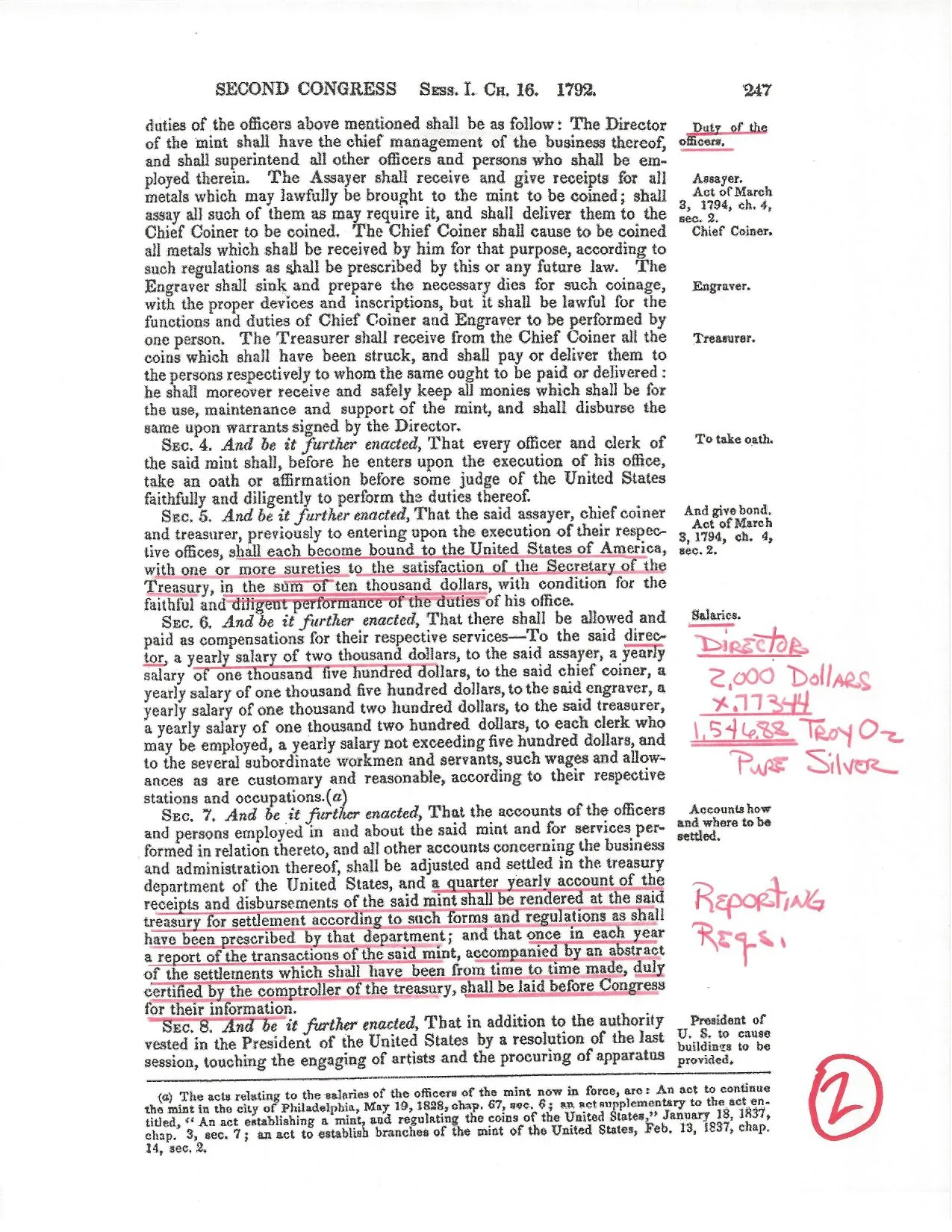
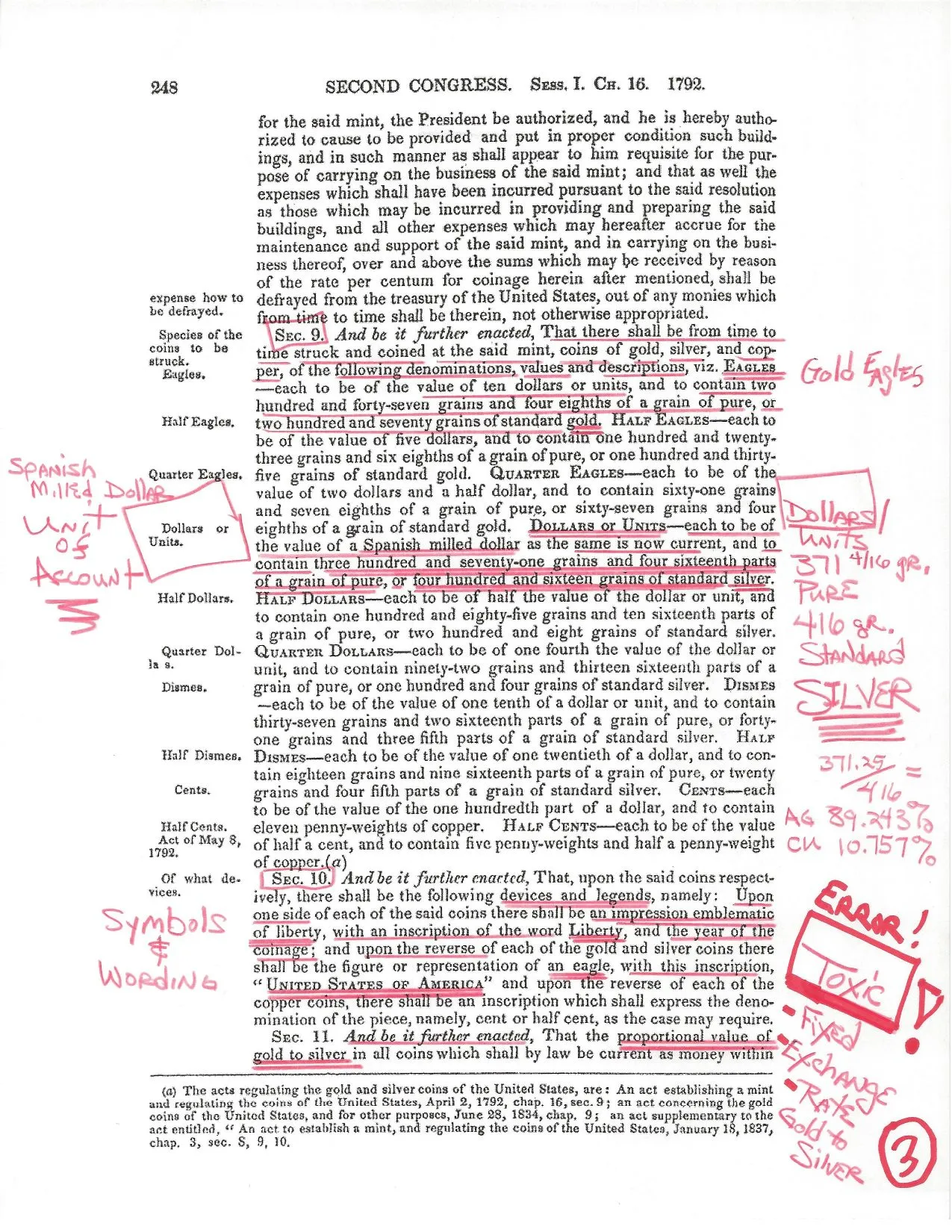
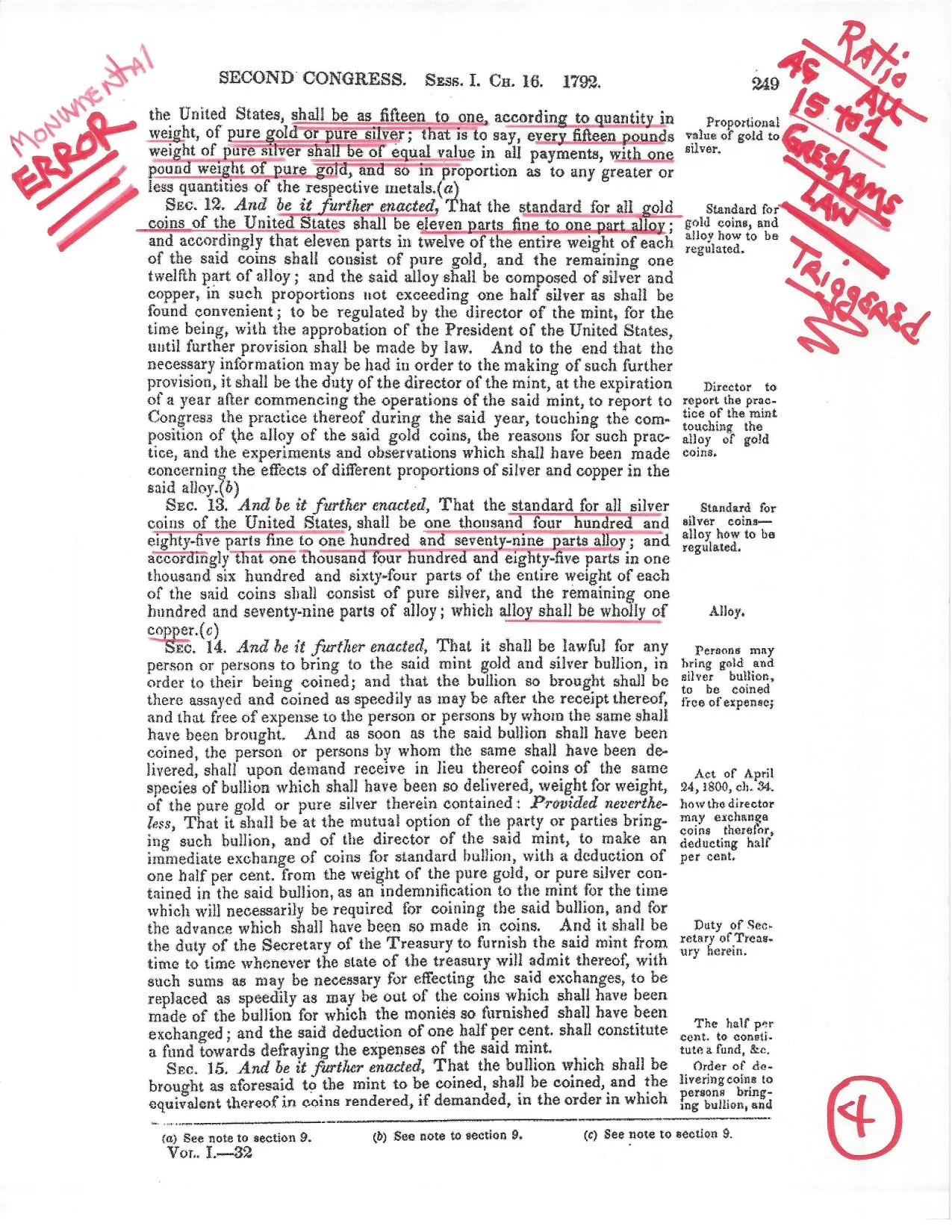
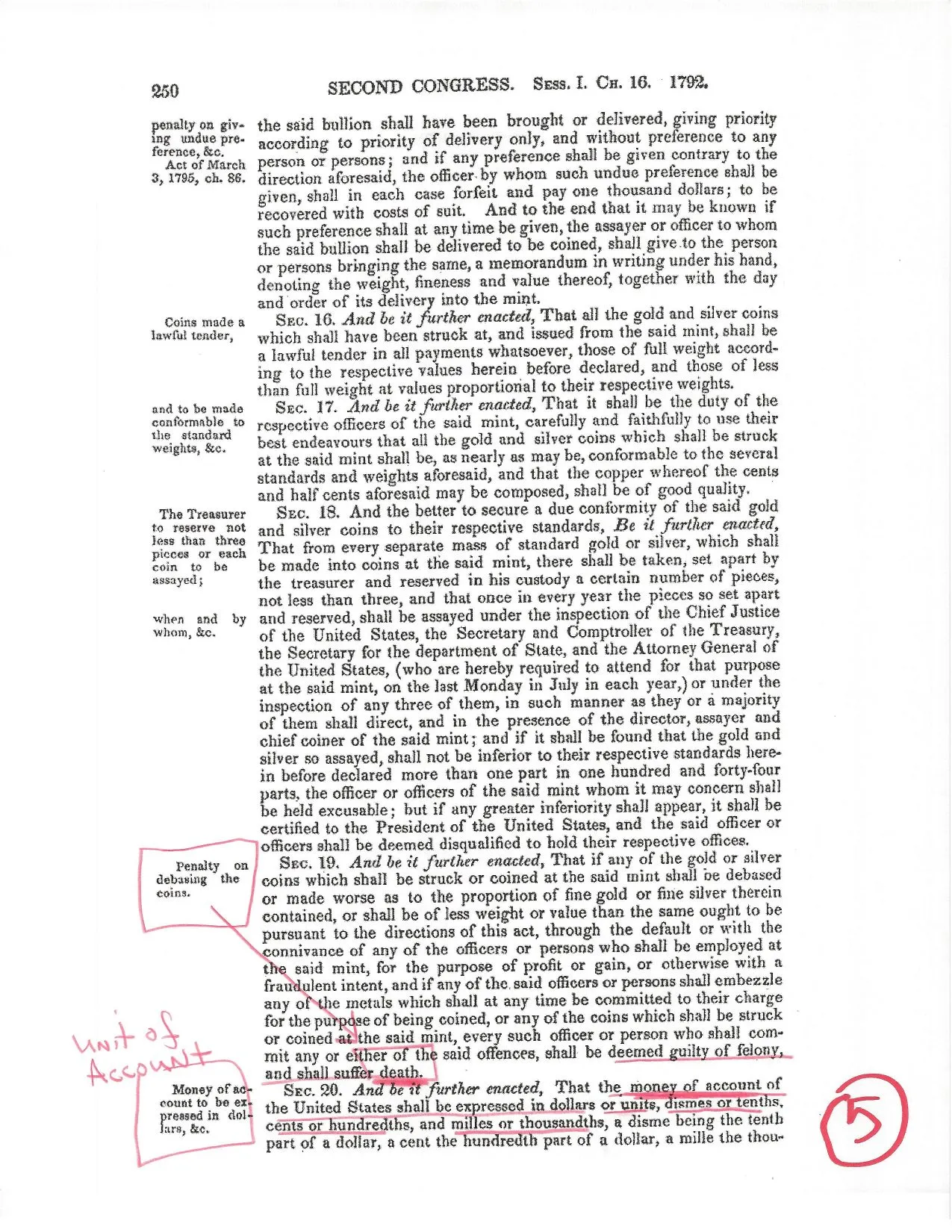
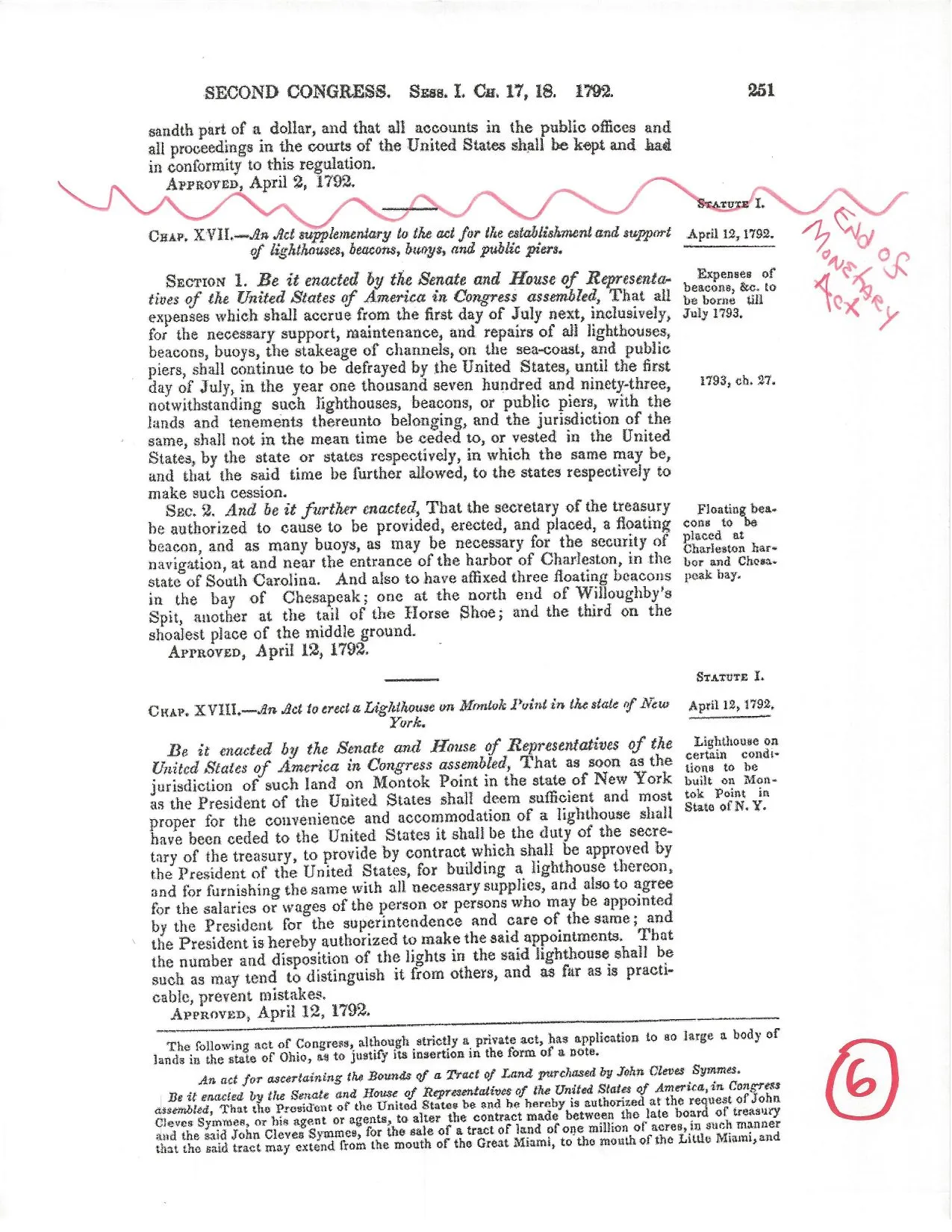
Source: Coinage Act of April 2, 1792, ch. 16, 1 Stat. 246 (Statutes at Large). Annotations by the candidate.